A logo ends up on your van, your quotes, your website, your shirts and the sign out the front. For most small businesses it’s one of the first design jobs they pay for, and it’s hard to know what a fair job looks like until you’ve been through one.
This guide to logo design for small business covers what the job should include, how to brief a designer, the warning signs with cheap and template logos, and what it costs with us.
What a logo design job should include
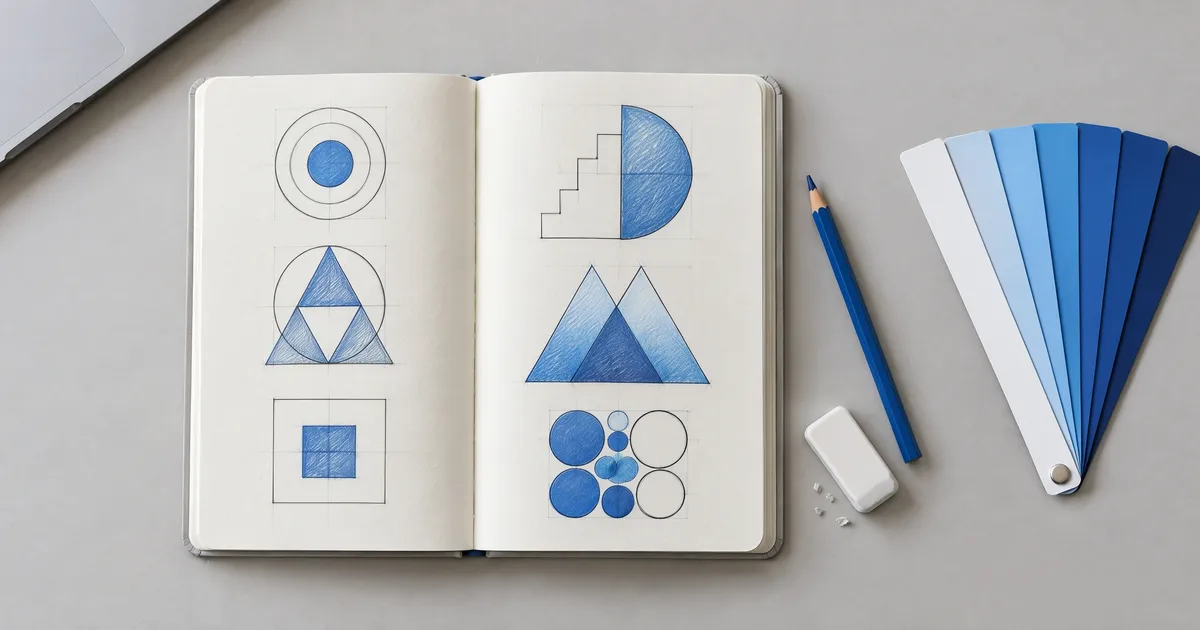
A professional logo job is more than one image file sent back by email. Before you pay a deposit, ask for a written list of what you’ll receive. It should cover:
- a set number of first concepts, so you can compare different directions
- a set number of revision rounds to refine the one you choose
- the versions of the logo you’ll need for different spaces
- colour and one-colour versions
- final files in formats for print, signage and screens
- a clear answer on who owns the finished design
Our logo suites include 3 concepts and 2 revisions, so you know up front what’s covered.
Logo versions you’ll actually use
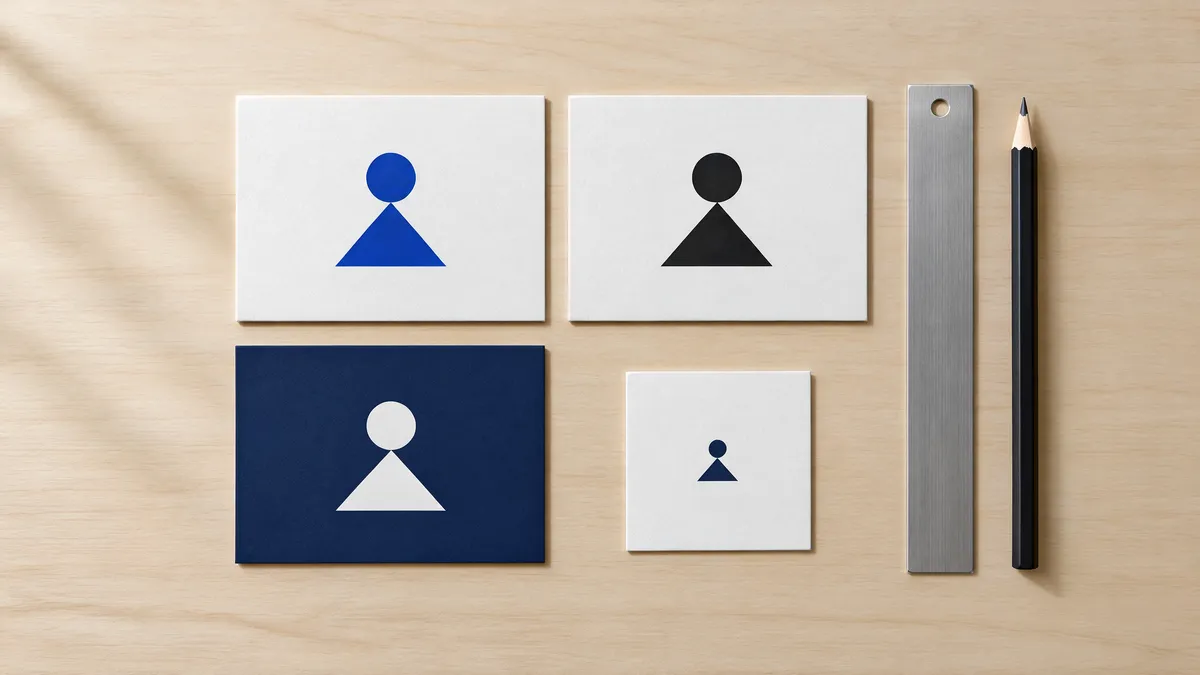
One logo rarely fits every space. A wide shop sign, a square social media profile and a shirt pocket all need something slightly different. A complete logo suite usually includes:
- a primary logo, often the symbol and business name side by side
- a stacked version, with the symbol above the name, for square or narrow spaces
- the symbol on its own, for social profiles, website tabs and small embroidery
- a full-colour version, plus solid black and solid white versions for one-colour printing, engraving and dark backgrounds
Ask to see each version at a very small size. If the business name turns to mush at the size of a social media profile picture, it needs simplifying before you sign off.
The file formats to ask for
Many logo problems show up months later, when a sign writer or embroiderer asks for “the vector file” and nobody has it. Ask your designer for:
- SVG, AI or EPS vector files, which scale to any size without going blurry (signage, vehicle wraps and embroidery all start from these)
- a print-ready PDF
- PNGs with a transparent background, for websites, social media, documents and email signatures
- JPGs, for places that don’t accept transparency
Your files should also come in two colour setups: CMYK for print and RGB for screens. Ask for the exact colour codes too (HEX for web, CMYK for print, and Pantone if you’ll use it), so every printer and web developer matches the same blue.
Who owns your logo?
It’s easy to forget to ask. Before work starts, get it in writing that you’ll own the final logo once it’s paid for, and that you’ll receive the editable source files.
Also ask whether any part of the design comes from stock graphics, a template or free fonts with commercial limits. A logo built from a stock icon can be used by anyone else who buys the same icon. If you plan to register your logo as a trade mark through IP Australia, that matters, so get proper advice before you lodge.
How to brief a logo designer
A good brief gets you better first concepts. You don’t need a long document, just clear answers to these questions:
- What’s the exact business name, spelling and capitalisation, and is there a tagline?
- What do you do, and who are your best customers?
- Where will the logo appear first? A ute door, a shopfront, a website or a uniform each changes what works.
- Which logos do you like, and which do you dislike? Two or three of each, with a sentence on why, helps more than a long description.
- What should it feel like? A word or two is enough, such as solid and dependable for a builder, or fresh and friendly for a café.
- Are there colours you must use or avoid?
Leave room for ideas you haven’t thought of. Telling a designer the problem (“people can’t read our sign from the road”) is often more useful than describing the picture you want.
Red flags with cheap and template logos
Most cheap logos look fine on a phone screen when you first see them. The problems turn up later, when you try to use them. Watch for:
- only a low-resolution JPG or PNG is supplied, with no vector file
- the design is a template or stock icon with your name typed underneath
- unlimited concepts promised, produced in minutes, all looking alike
- no written answer on who owns the finished logo
- one version only, with no stacked, icon or one-colour option
- fonts you aren’t licensed to use
- fine detail and gradients that won’t print or embroider cleanly
A cheap logo can cost more in the end, once you pay someone to redraw it as a vector file or start again when the business grows. If you’re comparing quotes now, our guide on how to choose graphic design packages covers what to line up side by side.
What logo design costs at LB Graphics
We work on fixed prices, so you know the cost before we start. All of our logo and branding packages include a logo suite with 3 concepts and 2 revisions, plus business card design and a clothing mockup.
- Bronze ($450) adds logo files in every format and a social media kit.
- Silver ($650) is the Bronze package plus a letterhead and email signature.
- Gold ($900) adds brand style guidelines, site signage design, a letterhead and email signature, and 2 social media posts.
- Website and Logo ($1,750) pairs a logo suite and files in every format with a 5 page WordPress website, domain and hosting set up, and a social media kit.
- Platinum ($2,500) is the full set, with a 5+ page WordPress website, stationery, site signage design and brand style guidelines.
You can compare every inclusion on our packages page. If your job doesn’t fit a package, we’ll quote it separately.
Putting your new logo to work
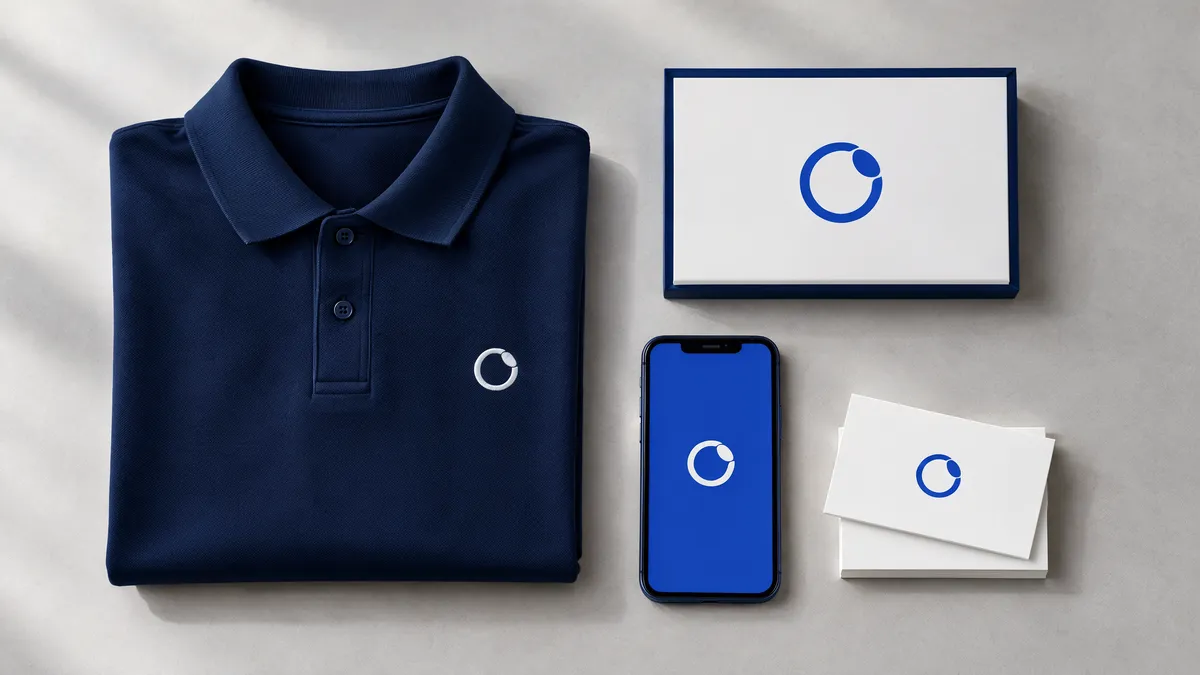
Once the logo is signed off, use the same files everywhere so your business looks the same wherever people find it:
- On business cards, pick the logo version that suits the card’s shape. Our business card design tips cover layout and print setup.
- For signage and vehicles, send the vector file and colour codes, never a screenshot.
- On your website, use the SVG or PNG versions, and the symbol for the browser tab.
- On social media, the symbol on its own usually reads best in a round profile picture.
- For uniforms, check the one-colour version with your embroiderer or printer before ordering in bulk.
If customers are seeing an older logo in some places and the new one in others, our post on branding fixes that stop you losing clients shows where to look first.
Get your logo designed
You can see logos we’ve designed for small businesses and trades on our work page. When you’re ready, send us a message through our contact page and we’ll get back to you within 24 hours, or call 0422 721 806 Monday to Friday, 9am to 5pm. We work with businesses Australia-wide.
Frequently asked questions
How much does logo design cost for a small business?
At LB Graphics, logo and branding packages are $450 (Bronze), $650 (Silver) and $900 (Gold). Each includes a logo suite with 3 concepts and 2 revisions, plus business card design. A logo and a 5 page website together is $1,750.
What files should I get with my logo?
Ask for vector files (SVG, AI or EPS) for signage and embroidery, a print-ready PDF, PNGs with transparent backgrounds for screens, and JPGs. You should get colour, black and white versions, plus the exact colour codes.
Can I use a logo maker or template instead?
You can, but you’ll often get a low-resolution file, a stock icon other businesses can also use, and no vector version for signs or embroidery. A designed logo suite gives you every version and file you need from the start.